Choosing AI smart glasses in Europe starts with one question: what do you want to do without reaching for your phone? Hands-free photography, open-ear audio and spoken assistance are different needs, and a pair of glasses that suits one may not suit another. This guide explains how to compare camera glasses, AI features and display glasses before you buy.
AI glasses, camera glasses and AR glasses: what is the difference?
Smart glasses is an umbrella term. Camera glasses focus on capturing photos or video from your point of view. Audio glasses place speakers and microphones in the frame for calls and listening. AI functionality may add voice interaction or image-based assistance through a connected app. AR or display glasses add a visual screen experience. These features can overlap, but the word “AI” alone does not tell you whether a device has a display, works offline or supports your language.
Choose the category around your main activity. For capturing a walk or recording a short demonstration, a camera may matter most. For listening to calls, focus on microphone quality and comfort. If you want a virtual screen for films or work, look specifically for display specifications rather than assuming camera glasses provide one.
Check country, language and phone compatibility first
For a European buyer, local software support deserves as much attention as the frame. Check that the companion app is available in your country and compatible with your phone and operating system. Ask which languages are supported for each individual function: voice commands, translation and the app interface may have different language lists.
Country availability can also vary by feature. Meta’s European rollout announcement illustrates why buyers should distinguish the hardware from the services enabled on it. A feature offered by one brand should never be assumed to work on another. Verify the exact model, software version and region before ordering.
Five specifications worth comparing
- Camera output: compare sample photos, video resolution, recording limits and stabilisation. Megapixels alone do not establish image quality.
- Comfort: consider frame dimensions, nose support, weight and whether the lens options suit your routine. Check prescription compatibility separately.
- Audio: open-ear designs leave your ears uncovered, but you still need to assess volume, microphone performance and how much sound others can hear.
- Battery use: ask for recording and calling runtimes rather than relying only on standby figures. Check how the glasses recharge.
- Connectivity and cost: confirm which functions require a phone, internet access, an account or a paid subscription.
Compare everyday and sports-style designs
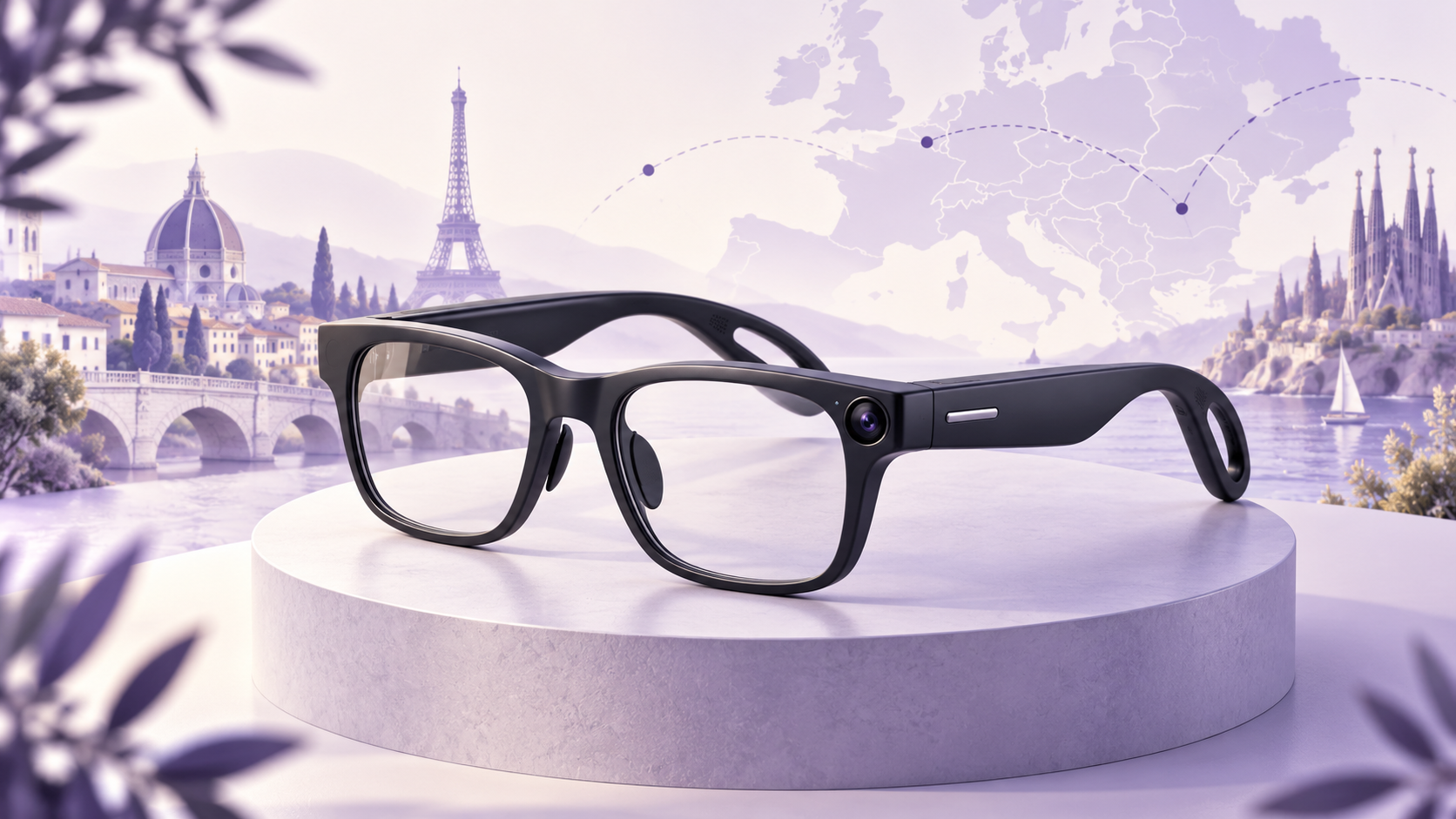
Wolkensmart’s M02S Smart AI Camera Glasses listing highlights an 8 MP camera and open-ear audio. The S100 AI Sports Camera Glasses listing highlights a 13 MP camera and a sports-style frame. These are useful starting points for comparison, not evidence that one is universally better. Review the current product details and ask about any feature that is essential to you before buying.
Before checkout: ask the practical questions
Check the final delivery destination, shipping charge, tax information, return process and warranty contact shown by the seller. Do not assume that a European delivery address means the product ships from a European warehouse. For a connected device, also read how recordings are stored, which cloud services are used and how you can delete your data.
When using a camera or microphone, respect other people and follow local rules and venue policies. A discreet frame does not make recording appropriate in every situation.
Frequently asked questions
Do all AI smart glasses have a screen?
No. Check for explicit display specifications. A camera, speakers and an AI app do not by themselves imply a visual display.
Can AI glasses translate without an internet connection?
That depends on the exact model and function. Ask which languages and offline modes are supported; do not assume that all translation features work offline.
Which pair should I choose?
Start with one priority, then check compatibility and comfort. Browse Wolkensmart’s AI Smart Glasses collection and compare the current specifications against your own checklist.
Reference: Meta’s announcement on AI glasses availability in Europe. This is a buying guide, not a hands-on product review. Product features and service availability should be checked at the time of purchase.